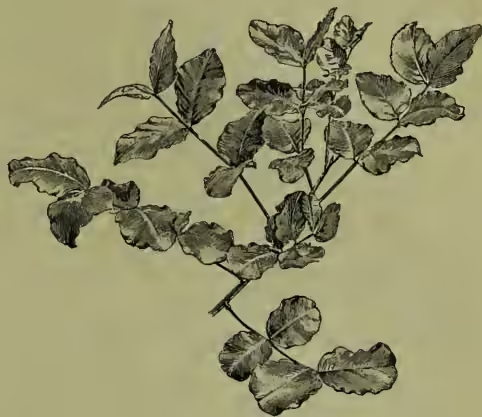
Carob, ALGAROBA, or LOCUST-TREE (Ceratonia siliqua), a tree of the order Leguminosæ, sub-order Cæsalpiniæ, a native of the Mediterranean countries. In size and manner of growth it some- what resembles the apple-tree, but with abruptly pinnate dark evergreen leaves, which have two or three pair of large oval leaflets. The flowers are destitute of corolla; the fruit is a brown leathery pod, 4 to 8 inches long, a little curved, and containing a fleshy and at last spongy and mealy pulp, of an agreeable sweet taste, in which lie a number of shining brown seeds, somewhat resembling small flattened beans. The seeds are bitter and of no use (although they were formerly used as weights by jewellers, and are said to be the original of their carats), but the sweet pulp renders the pods an important article of food to the poorer classes of the countries in which the tree grows. In Cyprus, &c., they are even pressed for their sugar, the residue being given with fodder. They are much used by the Moors and Arabs. They are also valuable as food for horses and cattle, for which they are much employed in the south of Europe, and are also imported into Britain under the name of Locust Beans, which name and that of St John's Bread they have received in consequence of an ancient opinion or tradition, that they and not the true (insect) locust are the 'locusts' which formed the food of John the Baptist in the wilderness. It seems more probable that they are the 'husks' (keration) of the parable of the Prodigal Son.—The Arabs make of the pulp of the carob a preserve like tamarinds, which is gently aperient.—The carob-tree is too tender for the climate of Britain, but its extensive introduction into the north of India has been recommended. The produce is extremely abundant, some trees yielding as much as 800 or 900 lb. of pods. The wood is hard, and much valued, and the bark and leaves are used for tanning.—The LOCUST-TREE (q.v.) of America is quite distinct from this.