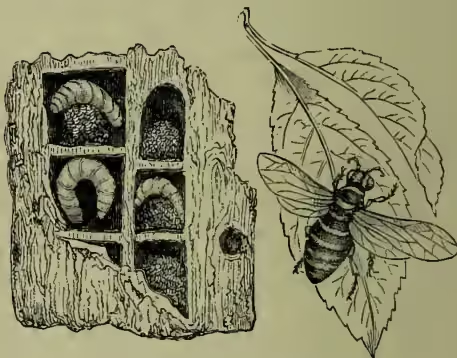
Showing the cells for eggs and larvæ, excavated in dead wood.
Carpenter Bee, a name given to various bees which excavate their nests in wood. This is most economically performed by those which choose a pithy branch such as bramble and brier. Ceratina albilabris carves out a canal about a foot long, divided by partitions of glued pith particles into a series of perhaps a dozen chambers. More than a score of Hymenoptera, including not a few true bees, have a similar habit. Much more laborious is the work of Xylocopa violacea, a very large bee with deep violet wings, found in southern and middle Europe. She chooses rotting vine-pros and espaliers, and with her mandibles unwearyingly bites a hole a foot or more in length. The grain of the wood is followed, but the progress is not much over -inch per diem. The tube is divided into a dozen or so chambers by partitions of glued sawdust. Each chamber contains an egg with a store of honey and pollen, and the roof of each cradle forms as it is made the floor of the one above (see BEE, p. 26). The North American X. vir- ginica exhibits similar habits in great perfection. The common British Megachile willughbiella bores in willow-trees. Various species of Osmia also burrow. Lazier species sometimes gain possession of old holes.