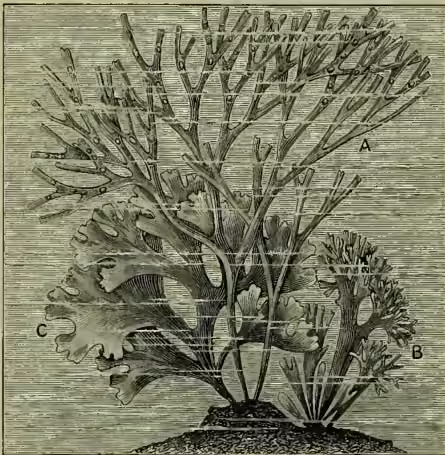
A, B, C, different forms of growth.
Car'rageen, often incorrectly called CARRAGEEN MOSS, or IRISH MOSS, the Irish name of Chondrus crispus, and some other allied species of seaweeds, long of local importance as an article of food, but now widely diffused, especially in invalid cookery. The true carrageen is Chondrus crispus (order Florideæ, family Gigartineæ; see SEA-WEEDS), and it occurs commonly on rocky shores, particularly in North Europe, presenting many local varieties. Its congener, Gigartina (Chondrus) mamullosa, most frequently accompanies it. It is 2, 4, 6, or even sometimes as much as 12 inches long, branched by repeated forking, tough and flexible, and of variable colour; from yellowish green through shades of red to purple being most frequent. After being collected and washed in fresh water, it is bleached and dried in the open air; and is then white or yellowish, dry, shrunken, horny, and translucent. When treated for ten minutes with cold water, in the proportion of half an ounce of carrageen to three pints of water, and then boiled and strained, it yields, with or without spices, a pleasant drink. With a larger proportion of carrageen, a thickish liquid or mucilage is obtained; and on boiling down this strong decoction, and cooling, a stiff jelly is procured. Milk may be employed instead of water; and with the stronger preparation, along with sugar and spices, when thrown into a mould, a kind of blanc mange is obtained. It is much recommended in pulmonary consumption and other maladies, but its value seems to depend on its being a pleasant and digestible article of food; even its nutritive importance has, however, been greatly exaggerated; especially when we consider that a pound of stiff jelly contains only half an ounce of the dried weed! It is sometimes employed for feeding cattle, in the preparation of size by painters and calico-printers, in stuffing mattresses, and for other uses. The 'Ceylon Moss,' in similar use in the East, is Spheroococcus lichenoides, another seaweed of the same order (Florideæ), and is of similar properties and uses. 'Iceland Moss' (q.v.), however, is a lichen, Cetraria islandica.