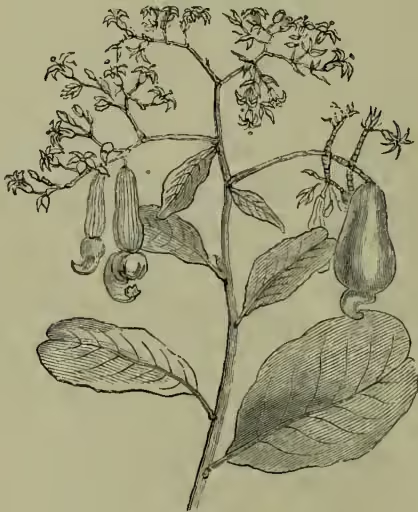
Cashew Nut (Anacardium occidentale), a tree of the sub-order Anacardiaceæ, of Terebinthaceæ (q.v.), cultivated in both the East and West Indies. It is a spreading tree of no great height. It abounds in a clammy, milky juice, which turns black on exposure to the air, and is used in India for varnishing, but is so acrid as to produce painful inflammation of the skin. The fruit of the tree is a kidney-shaped nut, about an inch long, seated on the thicker end of a pear-shaped fleshy stalk. The kernel is also surrounded by black acrid oily juice, but is itself pleasant and wholesome. The nuts were formerly sometimes put into old Madeira wine, and also roasted as an addition to chocolate. The fleshy stalk, sometimes called the Cashew Apple, varies in size from that of a cherry to an orange, and is white, yellow, or red. It is perfectly free from acridity, very pleasant, acid, and refreshing. A kind of wine is obtained from it by fermentation; and from this a well-flavoured spirit can be distilled. A bland gum resembling gum-arabic also exudes from the stem.