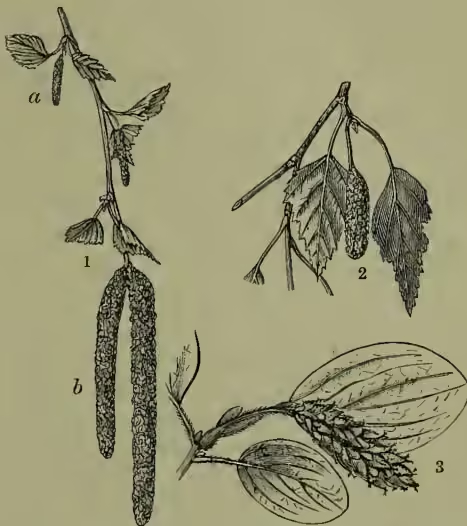
Catkin (amentum). Although the vegetative growth of all inflorescences tends to be more or less shortened and compressed in consequence of their reproductive purpose, we have this peculiarly manifested in the catkin, which is a crowded spike or tuft of small unisexual flowers with reduced scale-like bracts. Examples are found in the willow, hazel, oak, birch, alder, &c. (q.v.). In some, as in the hazel and oak, the male flowers only are in catkins, the female catkin of the flower being reduced to a few brown scales, while the female flowers of the oak are solitary, each on its own branchlet. Male catkins fall off after shedding their pollen, and even during life are frequently weak and pendulous, like the stamens of grasses, but these consequences of extremely reduced vegetative life become no doubt also of advantage at first in developing, and later in scattering, the pollen.