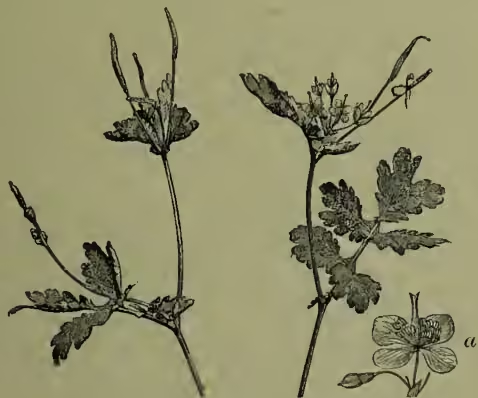
a, a flower.
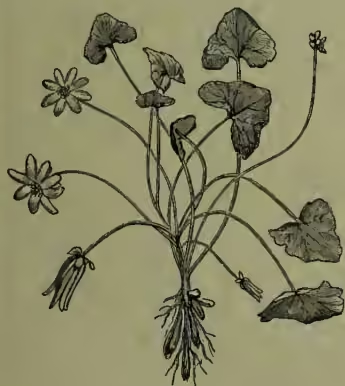
(Ranunculus Ficaria).
Celandine is the popular name (and corruption) of Chelidonium majus, a perennial papavera- aceous herb, which, although not uncommon in Britain, is doubtfully indigenous. Its pretty foliage and umbels of small yellow flowers, which bloom from May to August, might alone attract attention, but its ancient repute among herbalists is due to its yellow milky juice, which is very acrid and poisonous. Externally it was applied to warts and ulcers, and internally administered, it was supposed to be a specific for jaundice, apparently on no better warrant, however, than that drawn from its colour by the 'doctrine of signatures.' Its old English name Swallow-wort, which appears to be almost a translation of the botanical one, seems founded on a supposed association between the beginning and ending of its flowering time and the arrival and departure of the swallows.—It is, however, the LESSER CELANDINE which is more familiar to general readers, at least since Wordsworth devoted no fewer than three poems to its honour. This is Ranunculus Ficaria, also known as the common fig-wort or pile-wort, a quite unre- lated ranunculaceous plant, which grows in abundant patches in fields and coppices, and brightens them in early spring with its plentiful golden flowers. Its tuberous roots and swollen separable buds give it additional botanical interest, while it is also noteworthy that these results of peculiarly vegetative habit are associated with a frequent imperfect maturity of the pollen. See REPRODUCTION.