Cephalodiscus, one of the most curious and interesting organisms dredged by the Challenger expedition. It was found in the Strait of Magellan, was first supposed to be a compound Ascidian, was monographed (1887) by Professor M'Intosh as one of the Polyzoa (section Aspidophora), but is regarded by Mr Harmer as closely allied to that marvellous vertebrate-like worm, Balanoglossus (q.v.). The organisms form a spreading seaweed-like brownish colony, measuring in some cases 9 inches by 6, and including a great number of little individuals, protected by a membranous, flexible investment or house. Each individual resembles Balanoglossus (and also in part backboned animals) in many important points, such as (a) the presence of gill-slits; (b) the existence of a notochord as a dorsal outgrowth from the gut, growing forwards into the anterior region or proboscis; and (c) the possession of a dorsal central nervous system, most richly developed in the middle region (or collar), but extending on to the proboscis. As another apparent connecting link between invertebrates and vertebrates, Cephalodiscus is of the greatest zoological interest. See zoology of the voyage of
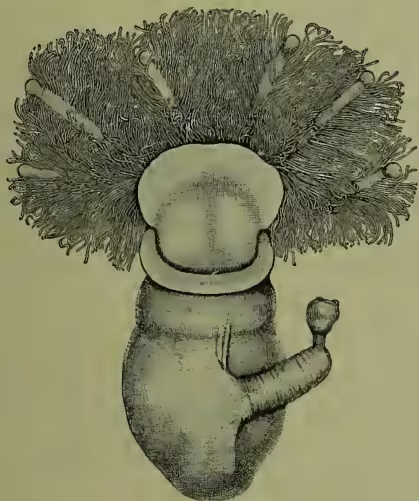
H.M.S. Challenger, Part lxii.; Report on Cephalodiscus, by Professor W. C. M'Intosh and Mr S. F. Harmer.