Ceratodus, the Queensland mud-fish, one of the remarkable sub-class of double breathers or Dipnoi. The name was originally used for the fossil possessors of certain tooth-plates found in the
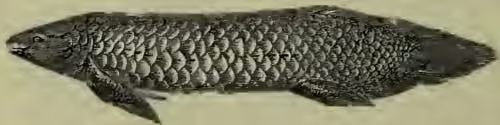
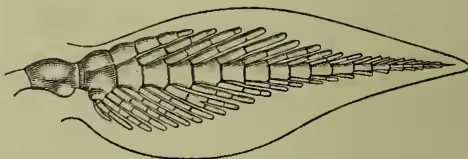
Triassic and Jurassic strata, and to this genus the Queensland survivor, which has similar dental arrangements, was referred when discovered in 1870. Barra munda is the local name. The fish may occasionally attain a length of six feet, has a later- ally compressed body with large scales, and possesses very unfish-like limbs with a central jointed axis and lateral pieces. It lives in muddy water often containing much decaying vegetable matter. In this medium it does not find the gill-respiration sufficient, and comes to the surface to take gulps of air into the swimming-bladder, which functions as a lung. It eats leaves and other parts of plants. At nights Ceratodus sometimes leaves the water, and moves along the river-bank. The expulsion of air from its air-bladder or lung is supposed to account for a grunting noise then often heard. In the dry season it buries itself in the mud.
The flesh is much esteemed, and compared with salmon. This interesting animal will be discussed, in its more technical relations, along with its neighbour genera—Lepidosiren and Protopterus—under the title MUD-FISHES.