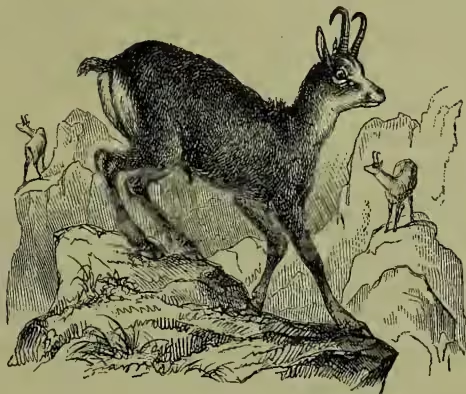
Chamois (Antilope or Rupicapra, Ger. Gemse), a goat-like species or genus of Antelope (q.v.). It inhabits the Alps and other high mountains of Central and Southern Europe, such as the Pyrenees, the Carpathians, and the mountains of Greece; it is also found on some of the Mediterranean islands, and on the Caucasus, Taurus, and other mountains of the west of Asia. In Europe it is now most numerous on the Bavarian and Styrian Alps. The chamois is about the size of a large goat, but the neck is longer in proportion, and the body shorter; the horns on both sexes are seldom more than six or seven inches long, black, rising nearly straight up from the forehead, and so bent back at the tip as to form a hook. A peculiar gland opens at the base of each horn. The summer colour is reddish brown, with a darker dorsal band, and a yellowish ventral surface; the winter colour is a darker brown, but white below. A dark brown band runs from the eye along each cheek. The rest of the head is pale yellow. The short tail is black.
The usual summer-resort of the chamois is in the higher regions of the mountains, not far from the snow-line, and it is often to be seen lying on the snow. In winter it descends to the higher forests. The aromatic and bitter plants of the mountain-pastures are its favourite food. Young twigs of rhododendron, willow, juniper, &c. are greedily devoured. It is—like the ruminants generally—very fond of salt, and often licks stones for the saltpetre which forms on them. The chamois is gregarious; flocks of one hundred used sometimes to be seen; but in the Swiss Alps, where the numbers have been much reduced by hunting, the flocks generally consist only of a few (4 to 20) individuals. Old males often live solitarily. The female bears one or rarely two young at a birth, in the month of March or April. The general cry of the chamois is a goat-like bleat.
It is an animal of extraordinary agility, and flocks may often be observed sporting in a remarkable manner among the rocky heights. It can leap over ravines 16 to 18 feet broad; a wall 14 feet high presents no hindrance to it; and it passes readily up or down precipices which almost no other quadruped could attempt. The hunting of the chamois is attended with great hardship and much danger. The hunter sometimes goes out on the adventurous chase alone; but more frequently several go out together, dividing into parties, of which one drives and the other shoots. The scent, sight, and hearing of the chamois are extremely keen. When a flock is feeding, one is always on the watch, and by a sort of whistle, announces apprehended danger. The flesh is highly esteemed. The skin is made into leather, and from it the original shammoy or shammy leather (wash-leather), so much prized for softness and warmth, was obtained, although the name has now become common also to leather prepared from the skins of other animals (see LEATHER and BUFF LEATHER). The horns are often used to adorn alpenstocks. Hairy balls or Concretions (q.v.) found in the stomach used to have a medicinal reputation. When taken young the chamois is easily tamed, and its general disposition is gentle and peaceable. See Keller, Die Gemse (Klagenfurt, 1885).