Chapter-house (Fr. salle capitulaire), the building in which the monks and canons of monastic establishments, and the dean and prebendaries of cathedral and collegiate churches, meet for the management of the affairs of their order or society (see CATHEDRAL). Chapter-houses frequently exhibit the most elaborate architectural adornment, as, for example, those of York, Southwell, and Wells. The original stained-glass windows remain at York, and are of exquisite beauty. On the walls of that of Westminster the original painting has been discovered. Chapter-houses are of various forms: those at York and Westminster are octagonal; those at Oxford, Exeter, Canterbury,
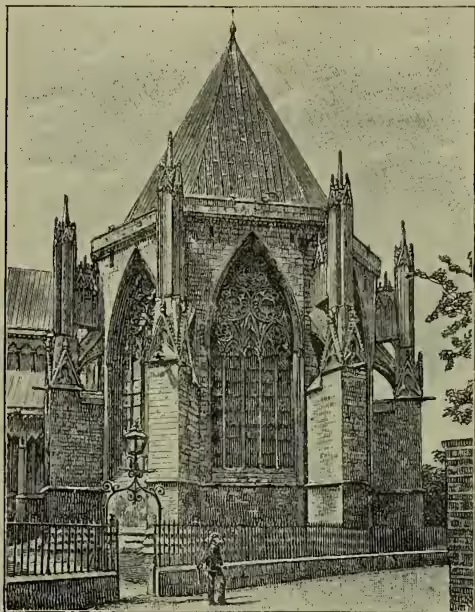
Gloncester, &c. are parallelograms; Lichfield is an oblong octagon; Lincoln, a decagon; and Worcester a circle. In France the chapter-house is generally square. They are always contiguous to the church, and are not generally placed to the west of the transepts. They sometimes open into the church, or are entered by a passage, but are more frequently in connection with the cloisters. In some instances there are arches or windows between the chapter-house and the cloisters to enable those standing in the latter to hear what goes on in the chapter-house. A stone seat on a raised step generally runs round the apartment. Chapter-houses were often used as places of sepulture, and have sometimes crypts under them, as at Wells and Westminster.