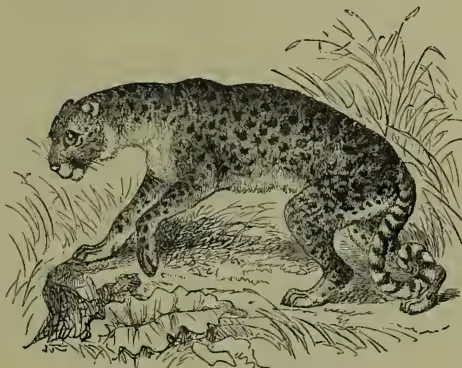
Cheetah, or HUNTING LEOPARD (Felis jubata or Cynailurus jubatus), an animal of the feline family, distinguished by its longer and narrower feet and less completely retractile claws, which are also more blunt and less curved. It also differs from other Felidæ in certain dental characters—e.g. of the upper sectorial tooth. With these peculiarities are associated a greater length of limb than is usual in feline animals, and the habit of taking its prey by running rather than by leaping. The cheetah is in size about equal to a leopard, but the body and limbs are longer. The colour is yellowish brown, with black and brown spots. It is very widely distributed, being found in Senegal, South Africa, Persia, India, Sennatra, &c. Its geographic range extends from the Cape of Good Hope as far north as the Caspian Sea and the steppes of the Kirghiz Tartars. The African form is sometimes distinguished as C. guttatus. The animal, though trained to the chase in man's service, must be caught wild and taught; tame-bred ones are useless (see J. L. Kipling, Beast and Man in India, 1891). Deer and antelopes are the game principally hunted, and packs of cheetah are kept for this purpose by Indian princes. The head of the cheetah is kept covered with a leather hood till within 200 yards of the game. When the hood is taken off, the cheetah stealthily creeps towards the herd, taking advantage of every bush and inequality for concealment, till, on their showing alarm, he is amongst them at a few bounds, and striking down his victim with a blow of his paw, instantly tears open its throat, and begins to suck the blood. It is then somewhat difficult to withdraw him from his prey, which is generally done by offering him meat. If unsuccessful, the cheetah does not attempt to follow the herd by running—nor does this animal seem to possess the power of maintaining speed through a lengthened chase, but slowly, and as if ashamed, creeps back to the hunters. In a domesticated state it is extremely fond of attention, and seems to repay kindness with affection.