Chigoe, or JIGGER (Sarcopsylla penetrans), a genus of flea, somewhat smaller than the familiar Pulex, and without its jumping legs. It is an American pest, found for about 30 degrees on each side of the equator, but especially abundant in the West Indies and in the north of South America. It is found also in the West African coast region.
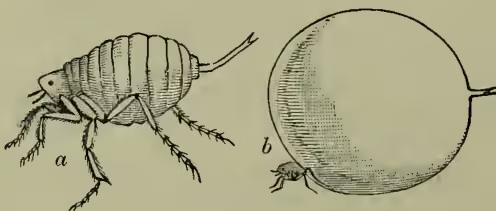
a, male; b, gravid female.
One of its many names—the 'sand-flea'—indicates its favourite haunt among sand. It seems always to keep near the abodes of men. The males and immature females live like other fleas on chance bites, and relish of course the blood of animals as well as of man. It is the impregnated female which is the chief trouble. Like many other animals it seeks a safe and quiet breeding-place. This is found under the skin of animals, on the feet or under the toe-nails of man. There the minute creature swells up enormously, attaining under the pressure of the growing eggs the size of a pea. Respiratory communication with the outer world is kept up by an air-hole at the posterior end. In less than a week the eggs are ready to be liberated, for the larvæ are not parasitic. The mother-animal has meanwhile undergone a marked degeneration, the internal organs being much squeezed and atrophied by the growth of the ova. The entrance of the female chigoe is marked by a tingling and itching sensation, but if the development be allowed quietly to proceed no evil results seem to follow. Pressure and premature attempts to isolate the intruder may, however, lead to ulceration. Its evil effects seem to have been exaggerated. When the development of eggs has been completed, the entire animal with its progeny may be gently removed, and in this operation the West Indian negresses are experts. Washing with tobacco-juice is also resorted to, and the leaves are sometimes pressed on the feet as a preventive.