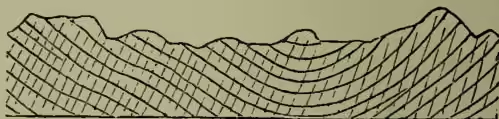
Cleavage, or SLATY CLEAVAGE, is a condition of rocks in which they split easily into thin plates. In true bedding the layers of rock correspond to planes of deposition or accretion, but in slaty cleavage the planes along which the rock splits may or may not coincide with bedding-planes. In point of fact they rarely do, but intersect the bedding-planes at all angles. Slaty cleavage is a superinduced structure—the result of the extreme compression which the rocks have undergone while they were being squeezed into anticlinal and synclinal folds (see ANTICLINE). When thin sections of clay-slate are examined microscopically, the grains of which the rock is composed are found to be flattened or compressed, and drawn out in the direction of the cleavage planes. Although slaty cleavage is best developed in homogeneous fine-grained clay-rocks, it yet occurs in many coarse-grained rocks as well, but in these the cleavage is never so perfect as in the finer-grained clay-rocks. As induration necessarily accompanies cleavage, the cleaved clay-rocks become of great economic importance, and are familiar to every one in the common blue and purple roofing-slates.