Cockchafer (Melolontha vulgaris), a common beetle of the Lamellicorn section, too well known in Europe for its voracious destruction of both crops and foliage. It is a comparatively large beetle, about an inch in length; generally of a reddish-brown colour; with fine hairs, scanty on the wing covers, but thick on the breast; and with the expanded ends of its feelers divided in the leaflet-like manner characteristic of Lamellicorns. In Scotland they are less abundant than in England.
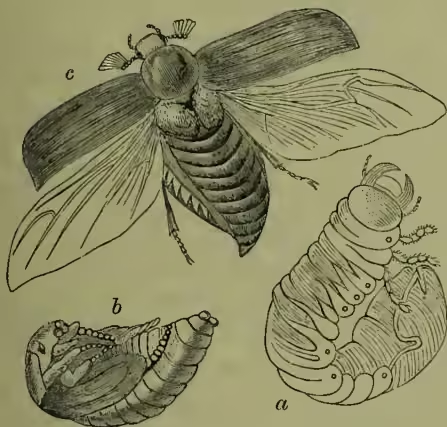
a, full-grown larva; b, pupa; c, perfect insect.
The males appear first, usually in the month of May, and are soon joined by their partners. They fly with a whirring noise, and being hungry as well as active, do great damage to many of our common trees. After some weeks of flight, the females heavy with eggs deposit these in the ground and thereafter die. In a month or so the larvæ develop, but do not attain winged life for four years. Meanwhile they are anything but idle, are in fact most voracious, and do great damage to crops and herbage. In some years when the conditions are unhappily favourable, they commit ravages estimated in millions. In the fourth year of larval life the young beetles bury themselves, and fall for two months into the usual quiescence of the pupa stage. The liberated insect works its way to the surface, and takes its flight in the spring of the fifth year. In warm seasons and regions the period of larval life may be shortened. The adults do most of their disastrous work in the twilight. The only riddance seems to be the exposure of the larvæ by harrowing, and the destruction of young and old by every possible means. Rooks and other birds, insectivorous animals, and other beetles help to reduce their numbers. They have oftener been plagues on the Continent than in Britain, but in 1574 their corpses are said to have clogged mill-wheels on the Severn, and in 1688 they clung like swarming bees on the trees and hedges in Galway. Melolontha hippo-eastani is another very destructive European species. The May bug of the United States (Lachnosterna quercina) is an allied form of similar habits.