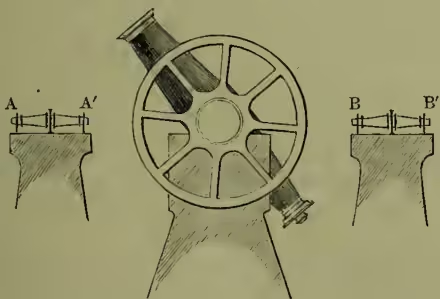
Collimator, a subsidiary telescope used to detect or correct errors in collimation (i.e. in directing the sight to a fixed object) when adjusting for transit observations. When the vertical thread in the field of view exactly coincides with the vertical axis of a telescope, the instrument is collimated vertically; and when the horizontal spider's thread just covers the horizontal axis, the instrument is correct in horizontal collimation. If three solid piers stand on the meridian, so that the telescope to be tested can be laid between the collimators and have its axis coincident with both of theirs, the principle of correction becomes almost self-obvious. Removing the great telescope, the collimators (AA' and BB' in fig.) are adjusted till the cross-wires in one coincide perfectly with those of the other in all possible positions. Then replacing the 'transit circle,' it is examined and tested by reference, first to one, and then the other collimator, the verification requiring that it be turned through 180° till the threads in the three fields of view absolutely coincide, and the collimation is pronounced perfect.
Practical astronomers set great value on the collimator (in the arrangement just described) for having entirely superseded the 'meridian mark.' By Rittenhouse's principle a telescope can become its own collimator, especially in determining the nadir point. When the axis is vertical over a vessel containing mercury, the telescope will be collimated when the cross-wires are brought to exact coincidence with their image seen in the mercury. See TELESCOPE.