Cone-shell (Conidae), a family of Gasteropod molluscs, with substantial conical shells. The last whorl of the spiral is much larger than those which precede it and simply form the apex of the conc. The aperture is long and narrow, with a sharp-edged outer lip. The head of the animal has a long proboscis; the 'foot' is long and narrow as the aperture suggests; the respiratory siphon is short and thick. In the living state the shell is covered by a yellowish epidermis, and it is only when this is rubbed off that the great beauty of the colour and marking is disclosed. During life the inner layer of the shell and the internal partition of the second last whorl undergo more or less absorption. The principal genus, Conus, includes some 500 living species, ranging from the
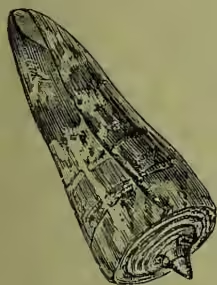
Mediterranean to the Cape, but especially at home in the eastern equatorial seas. They creep in relatively shallow water among the rocks and coral reefs, and prey upon other molluscs. Among the numerous species, some are rare, and have been favourite objects of collectors' mania. Many pounds have been paid for single specimens, and Conus gloria-maris is said to be 'worth ten times its weight in gold.' C. cedo nulli is in its finer varieties a much prized treasure, and C. ammiralis is another favourite, though much commoner form. Numerous fossil species are known from the chalk onwards. Some of the animals are eaten, and the shells often form ornaments, or are worn down into rings and the like. The angur-shell (Terebra), the latticed shell (Cancellaria), the tower-shell (Pleurotoma) are nearly allied genera, often regarded as types of separate families.