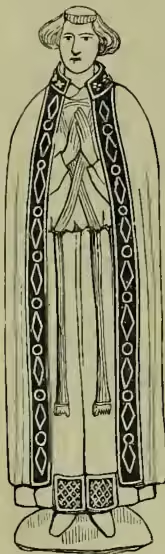
Cope (Lat. cappa, pluviāle), an ecclesiastical vestment worn in the Latin Church during processions, solemn lauds and vespers, and other solemnities, but not by the celebrant at mass. The Greek form of the cope (manduas) is restricted to archimandrites and bishops. The cope of the former is plain, that of the latter with a pattern of wavy stripes. The Armenians alone use the cope as the vestment for mass. In the Church of England the cope was allowed as an alternative to the vestment or chasuble by the Common Prayer-book of 1549. Both were forbidden by that of 1552, but legally revived under Elizabeth in 1559. By Canon xxiv. of 1603, the principal minister at the Holy Communion in cathedral or collegiate churches, together with the epistoler and gospeller, is directed to wear the cope, and at Durham it was so worn till Bishop Trevor's episcopate (1752-71), when one of the prebendaries disused it, finding it interfered with his wig. The cope, however, has been customarily worn by the clergy officiating at coronations; while some further revival of its use has taken place of late years. The cope was originally a cloak worn for ordinary purposes. In form it is a semicircle, without sleeves and with a hood. It is fastened across the breast with a clasp or morse. Copes soon began to be ornamented with embroidery, and even with jewels; and so early as the 13th century they became the most magnificent and costly of all the vestments of the priesthood.