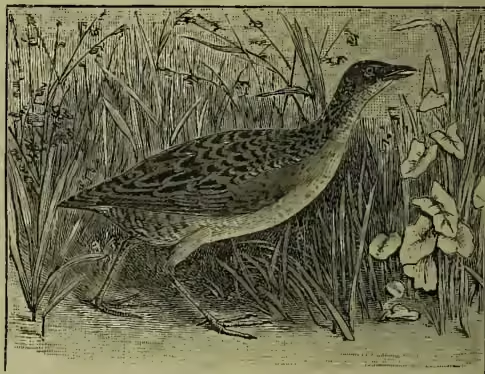
Corn-crake (Crex pratensis), one of the true rails, in the old order of Grallatores, whose cry at least is very familiar in Britain. The bird itself is seldom seen; it is about a foot in length, and has colours varying from brownish-gray to red. The bill is shorter than the head, and slightly bent, the tail is very short, the legs are long and powerful. As a summer visitor to Britain, coming in May and leaving in autumn, the bird is well known by the harsh cry of the male, which is sometimes imitated for decoy purposes by running the thumb-nail along the teeth of a small comb. The cry is mostly uttered in the evening and throughout the night, and is much less frequent after the young are hatched. Unlike the nearly related water-rails, the corn-crake frequents dry corn and hay fields. It can, however, swim well on occasion. Its running powers are very great, but it flies rather heavily. It is very prone to trust to concealing itself rather than to flight. The females are very faithful to the young birds, which are covered with black down when hatched. The species is widely distributed in Northern Europe and Central Asia, but its headquarters are in Africa. The flesh is very good eating. See RAIL.