Crow (Corvus), a genus of Passerine birds, and type of a family Corvidæ, which also includes Magpies (Pica), Nutcrackers (Nucifraga), Jays (Garrulus), Choughs (Fregilus), and other genera. The crow family is included in that division of Passeres known as Acromyodi, from peculiarities in the vocal organs, and its members share the following characters: the bill is moderately long, strong and thick; bristles at the base cover the nostrils; the wings are of medium size and rounded; the tail is not prominent; the feet are strong. On the whole they outdo the other Passeres in size and strength, and are represented by towards two hundred species.
Keeping first to the crow genus proper (Corvus), we need give little description of the general characters of these familiar birds. The long black bill, the large gape, the tail all but covered by the wings, the black feet, &c. are well-known characteristics. The genus is distributed in most parts of the world except South America and New Zealand. They are essentially tree birds, and almost always build their nests there. In diet they are predominantly vegetarian. It is important to distinguish the four British species of crow. (1) The Raven (Corvus corax) is a well-known species in Europe and North Asia. Its black plumage has a bluish sheen; the upper portion of the bill is bent over the lower; the wings reach the point of the tail. It is a hungry bird, devouring inter alia field-mice and small birds; it is not unfrequently tamed, and can be readily taught to ejaculate and play tricks. See RAVEN.
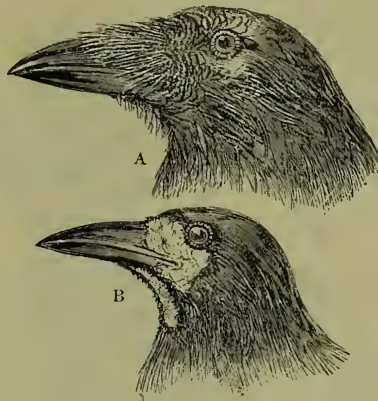
(2) The Rook (C. frugilegus) is a commoner smaller species of gregarious habit. There is the same metallic shimmer, the wings again reach the tail, but the upper bill is not elongated over the lower. The face becomes curiously bare during the first winter, and so remains. It is of use in destroying injurious insects, but its omnivorous appetite includes eggs, young birds, fish, walnuts, corn, &c. See ROOK. The accompanying figure shows the heads of the raven, A, and the rook, B, and illustrates well the prevalent characters of the bill in this genus. It shows also in the raven the bristles which, as in most of the species, surround its base, but which are wanting in the rook. Noteworthy, too, is the greater strength of neck, head, and bill of the more carnivorous as compared with the more frugivorous species.
(3) The Hooded Crow (C. cornix) derives its name from the fact that while the general colour is ashen gray, the head is black. The under throat, the wings, and the tail are also, however, black. Like the next species, the hooded crow is fond of carrion, and both are often shot by gamekeepers on account of the damage they do to young game-birds, &c.
(4) The Carrion Crow (C. corone, or Corone hiemalis), which is of the same size as the rook, has black plumage, with a steel-blue shimmer on back and head, and wings which do not reach the tip of the tail. The bases of the feathers are gray in the rook, white in the carrion crow. It is useful in destroying mice and insects. It is said to interbreed with the preceding species. The name is given in America to a Vulture (q.v.). In some parts of Scotland the carrion crow is called the Hoody. There is considerable dispute as to the specific dignity of some of the crows. A few other forms in addition to the above four may be noticed. The crow of North America (C. americanus) is very similar to the carrion crow, but rather smaller, and, after the breeding season is over, congregates into great flocks; it is also partially migratory, great numbers from the more northerly parts moving to the south on the approach of winter. Its habits are otherwise intermediate between those of the carrion crow and the rook.—The Fish Crow (C. ossifragus) frequents the coasts and southern rivers of the United States, feeding chiefly on fish, which it catches with great dexterity. It also sometimes assails gulls, and compels them to disgorge their prey.—The Jabbering Crow (C. jamaicensis) of the Blue Mountains of Jamaica is remarkable for the resemblance of its voice to human speech. Sir J. E. Tennent gives an interesting account of the small glossy gray-necked crow of Ceylon (C. splendens), which frequents the towns, feeding on offal, and boldly enters rooms through open windows, to snatch some morsel from the dinner-table. See also CHOUGH, JACKDAW, JAY, MAGPIE.