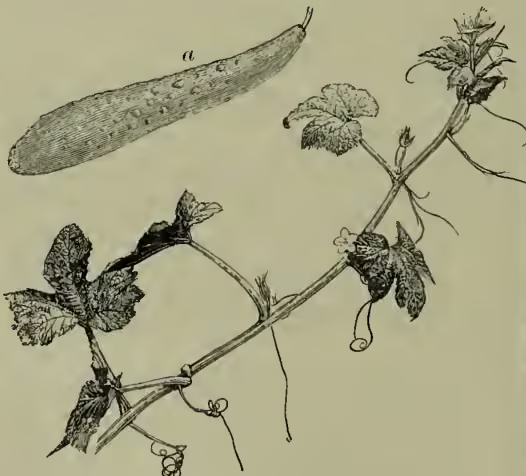
a, fruit.
Cucumber (Cucumis), a genus of Cucurbitaceæ. The Common Cucumber (C. sativus), distinguished by heart-shaped, acuminately pentangular leaves, which are rough with hairs approaching to bristles, and oblong fruit, is a native of the middle and south of Asia, and has been cultivated from the earliest times. Its fruit forms an important article of food in its native regions, the south of Europe, &c., and an esteemed delicacy in colder countries, where it is produced by the aid of artificial heat. Many varieties are in cultivation, with fruit from 4 inches to 2 feet long, rough, smooth, &c. Young cucumbers are much used for pickling, and are called gherkins; a small fruiting variety is selected for this purpose. The cucumber is cultivated in fields even in the south of England, for the supply of the London market; but in all parts of Britain the plants required for the purpose of growing either in the open or under glass must be reared in a hotbed in spring. In the northern parts it can only be successfully cultivated in frames during summer. A large trade is now done in winter crops of cucumbers, which are grown in well-heated, specially constructed glass-houses. In many parts of the United States it will, if planted late enough to escape the frosts, grow well with almost no care. But it requires rich soil, much moisture, and heat. To this genus belong other species valued for their edible or ornamental fruit, but all that are popularly named cucumber are not properly Cucumis, but merely species or varieties belonging to allied genera. Dudaim (C. Dudaim) is a highly fragrant, handsome fruit, with insipid flavour and flaccid flesh, often grown in this country by gardeners under the name, Queen Anne's Pocket Melon, simply for its attractive appearance, the fruit being about the size of an ordinary orange, and beautifully barred with green and orange or deep orange-red. (Dudaim is the Hebrew name rendered Mandrake in Scripture.) Connemon is the fruit of C. conomon, which is grown everywhere in Japan, and preserved and sold as an article of food. C. auguria, a West Indian species, with fruit about the size and shape of a pullet's egg, is esteemed as an ingredient in soups, and is also eaten raw, but considered inferior in that state to the common cucumber. The Snake Cucumber (C. flexuosus) has fruit of great length which is eaten either pickled or raw, and has similar qualities to the common cucumber. A number of species of Cucurbitaceæ are natives of the United States, but they are all of small economic importance. For other representatives of the natural order Cucurbitaceæ, see COLOCYNTH, ELATERIUM, MELON, &c. See, too, May's Cucumber Culture (1880).