Dipper (Cinclus), a genus of birds in the Thrush family (Turdidae), distinguished by an almost straight, compressed, sharp-pointed bill, by the possession of a nostril valve, and still more by their peculiar manners and habits. They frequent clear pebbly streams and lakes, feeding chiefly on molluscs and on aquatic insects and their larvæ, which they seek even under water, diving with great facility, and moving about by help of the wings. The dipper carries its rather short tail elevated after the manner of wrens, which it also resembles in the 'frequent becks' or dipping of the head, accompanied with an upward jerking of the tail.
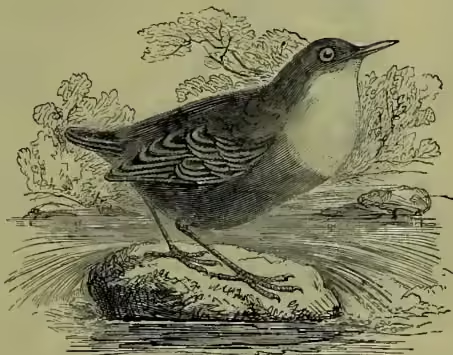
One species is found in Britain, the Common Dipper or Water Ousel (C. aquaticus), a bird rather smaller than any of the British thrushes, of a generally grayish-black colour, with throat and upper part of the breast pure white. It is found throughout the whole of Europe and the north of Asia, but chiefly in hilly and wooded districts. It is not gregarious. The dipper never fails to attract notice, as it sits upon some stone in the midst of or beside the stream, its white breast rendering it conspicuous as it repeats the movement from which it derives its name. Its song is not confined to the breeding season, and may even be heard among the frosts of winter. There is, of course, no truth in the common belief that the bird can walk on the ground at the bottom of the water. The very curious nest of interwoven moss, domed and with the entrance on the side, is built usually in some mossy bank close by a stream, and often near or under a cascade. The dipper breeds twice in the year. The statement often made that it eats the spawn of salmon and other fishes, in the belief of which it is much persecuted in Scotland, has never been sufficiently authenticated. Nine other species of world-wide distribution are known.