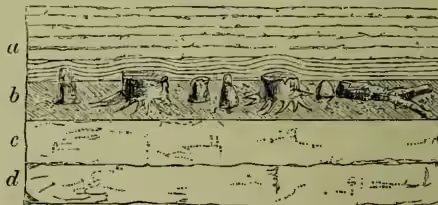
Dirt-beds, the quarrymen's name, introduced into geology, of several layers which occur in the Purbeck Beds (q.v.), having the appearance of black dirt, and which were explored in 1857 by Mr Beckles, in 1880 by Mr Willett. They rest on the fresh-water limestones of the Purbeck, and consist of one principal layer, from 12 to 18 inches thick, and from two to four thinner layers. The substance is to a large extent a dark-brown or blackish earthy lignite, being the remains of an ancient vegetable soil. Through it are dispersed in considerable abundance rounded fragments of limestone (derived from the underlying bed) from 3 to 9 inches in diameter. Fossil Cycads (q.v.) are the predominant vegetable remains; they occupy their original upright position, having become fossil on the spots where they grew. The stumps stand erect for a height of from 1 to 3, or even more feet, and at distances from each other similar to what may be observed in a recent forest. Besides these, the dirt-bed contains the silicified stems of coniferous trees, laid prostrate, in fragments 3 or 4 feet in length. From the accompanying diagram it will be seen that the marine conditions under which the Jurassic limestone (Portland stone) was accumulated were succeeded by estuarine and fluviatile conditions, when the overlying calcareous beds forming the base of the Purbeck series were deposited. These beds were in like manner overspread with sandy carbonaceous clay, which eventually formed a land surface upon which grew a forest of cycads. Subsequently this forest was submerged and converted into a morass; and the trees decayed, and were eventually overturned by the force of wind or flood. Thereafter they were buried under newer accumulations of silt and calcareous mud, which now form the overlying fresh-water calcareous slate, &c.