Dragon, (1) a name surviving from mythology and imaginative beast-lore, as the scientific title of a genus of arboreal lizards, of which the most familiar is Draco volans. The genus is especially remarkable for the extension of the skin of the sides on the prolonged posterior ribs. A parachute is thus formed which enables these 'dragons' to take rapid swoops from branch to branch. The tail is very long; the skin of the throat forms a loose wattle; the colours are particularly brilliant.
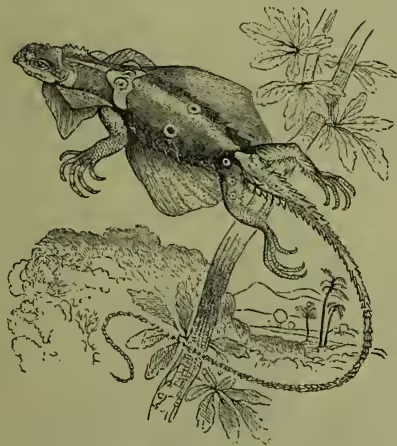
There are several species inhabitants of the East Indies, not including Ceylon.—(2) The term dragon has also been applied in modern times to a large lizard (Thorietis draccena) found in Brazil and Guiana. It attains a length of 3 feet, most of which goes to the tail. Tejus and Ameiva are allied genera.—(3) The ancient myths might to some extent be rehabilitated in the application of the term 'dragon' to some of the extinct saurians. See LIZARD, REPTILE.