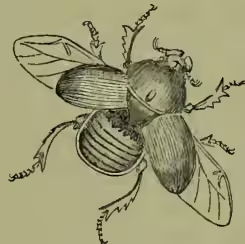
(Geotrupes stercorarius).
Dung-beetle, a name given to a number of lamellicorn beetles (in the sub-families Coprophaga and Arenicolæ), which live in great part on the dung of quadrupeds. One of the commonest, the Black Dor (Geotrupes stercorarius), is interesting in many ways, on account of its elaborate burrows and stores under cow-dung and the like, for the 'stridulating' noises made by both sexes by rubbing part of the abdomen against a ridge on the hindmost leg, for the little ticks (Gamasus coleoptratorum) by which they are generally infested, and for its association with another nearly-related beetle (Aphodius porcus) which finds its way into the burrow, eats the Geotrupes' eggs, and lays its own in the liberal supply of food thus thievishly appropriated. Among the other British species of Geotrupes, G. typhæus, with three horns on the front of the thorax in the males, is found especially on heaths where there are sheep. The sacred beetle or Scarabee (q.v.) (Ateuchus or Scarabæus sacer) is a well-known dung-beetle. They roll pellets of dung along with great industry, and often appear unable to resist stealing them from one another. A related form (Sisyphus schäfferi), the pill-rolling beetle, is said to lay its eggs inside the pellets of dung, and both sexes are described as taking part in rolling these to a place of safety. The scarabee used also to be credited with laying eggs within the pellets, but this appears to be erroneous. Copris lunaris is a common European dung-beetle, which makes burrows and stores dung for the larvae. There are many other forms. The Dor and others feign death, stretching out their legs in rigid epileptic-like fashion. Crows and other birds are said to prefer them alive.