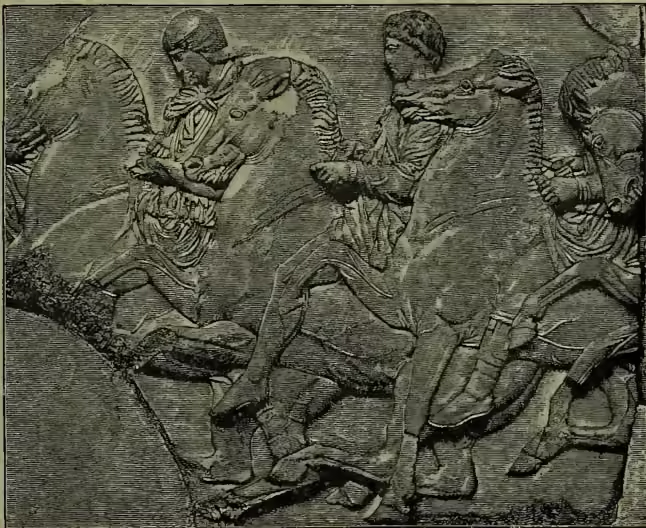
Elgin Marbles, ancient sculptures brought from Greece by the seventh Earl of Elgin, then ambassador to the Porte, and acquired for the British Museum in 1816 for £35,000. Elgin obtained a firm to examine, measure, and remove certain stones with inscriptions from the Acropolis of Athens, then a Turkish fortress. His agents, on the strength of this firm, removed the so-called Elgin Marbles, packed before Elgin's recall in 1803, but not finally conveyed to England till 1812. They are said to have cost the ambassador upwards of £74,000; and both before the purchase by the government and afterwards, there was fierce controversy as to the artistic value of the statues, and Elgin's right to remove them from Athens. Lord Byron's view as to the unjustifiableness of the removal was shared by many, who nevertheless believed not merely that the marbles were thus saved from great risks, but that they were now made vastly more accessible to students than they could have been in Athens during the troublous times that followed.
These sculptures adorned certain buildings on the Acropolis of Athens. The chief portions, which are from the Parthenon or Temple of Minerva, were designed by Phidias, and executed by him, or under his superintendence. They consist mainly of statues from the pediments, metopes, and a large part of the frieze of the cella (see ATHENS, Vol. I., p. 538); a figure from the Erechtheum, and a statue of Dionysus, and part of the frieze of the Temple of Winged Victory. See Newton in the Contents of the British Museum, Elgin Room (1881-82).