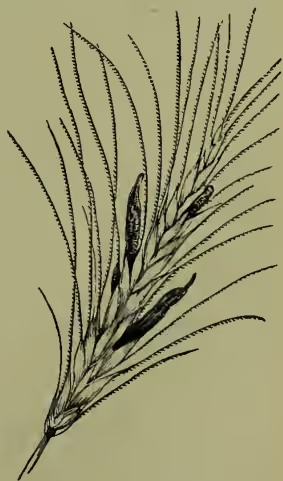
Ergot, a diseased condition of the ovary of grasses and sedges, due to the presence of species of Claviceps, a Pyrenomycete fungus (see FUNGI), of which the filamentous mycelium of the mould ramifies through the tissue of the flower, causing the outpouring of sugary sap, and bearing a multitude of spores, the ovary meantime becoming deformed and enlarged. In this state the mould was formerly described as a distinct species. This now withers on the surface, but the deeper mycelium within the ovary becomes denser and harder, forming the so-called sclerotium, and lies dormant until the grain is sown in early spring, when it bears globular heads which contain depressions or perithecia, containing the ascospores, which again recommence the cycle. The medicinal 'ergot of rye' is that formed by Claviceps purpurea. Producing rapid contraction of the uterus, it is often employed in midwifery; but its use in unskilled or unscrupulous hands is attended by the most serious risks. It has also been used in dysentery, epilepsy, whooping-cough, and as a styptic. The continued eating of bread made of ergotised rye produces a specific disease called Ergotism. This is a terrible form of poisoning, in which not only convulsions appear, but often also gangrene of the extremities, resulting in mutilation or death, even recovery from less serious doses being slow and difficult. Many dreadful epidemics in rye-consuming countries (as in Lorraine and Burgundy in 1816), the causes of which were not understood, are now supposed to have been due to ergotism. See also RAPHANIA.