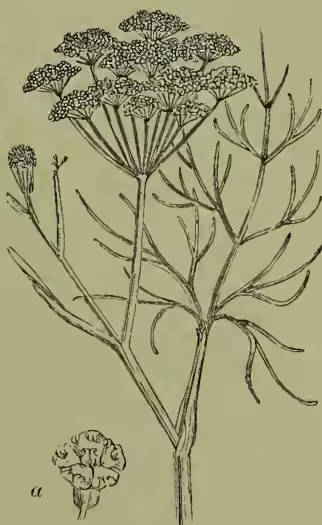
a, a flower.
Fenugreek (Trigonella), a genus of Leguminosæ, allied to clover and melilot. The Common Fenugreek (T. fœnum Græcum) is a native of the south of Europe, and of some parts of Asia; it is much cultivated in India as a fodder-plant, and derives its name since classic times (Fœnum Græcum, 'Greek hay,' of which the English name is a corruption) from its use as fodder in Greece. On account of its strong smell it must, however, be mixed with other plants. The seeds also have a strong, peculiar smell, and an oily, bitter taste; the flour made from them is used for enollient poultices, but only in veterinary practice. The seeds of Fenugreek were formerly held in great esteem in medicine, and are still largely consumed by women in the East, especially in Egypt. An Indian species (T. incisum) is used as fodder, and the legumes of another (T. esculenta) are esteemed as food.