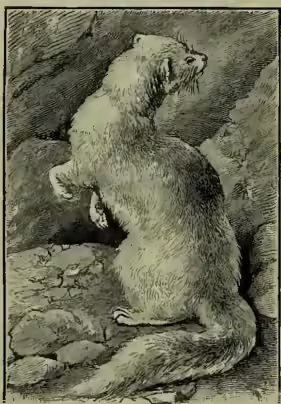
Ferret (Putorius furo), a half-tamed albino variety of the polecat (P. feticus). It is slightly smaller than the wild form, measuring about 14 inches in length without including the tail, and has white or yellowish fur and the usual red—i.e. unpigmented eyes. Like some other albinos, it is delicate and requires to be carefully housed in cold weather. The variety is virtually constant, except when the ferrets breed with polecats, which they will readily do; then a 'variety-hybrid' with intermediate colouring results. The ferret has been for long in human hands, for Aristotle knew it, and the Romans used it as we do. It seems to have originated in Africa, or in southern Europe—e.g. Greece—and may have been reared by the ancient habit of keeping a polecat to hunt for mice, before the days of the domestic cat. In spite of its long training, it is hardly tame, far less affectionate, and needs to be looked after lest it go chicken-hunting on its own account. Even infants are not safe from its deeply ingrained thirst for blood. It is used both in Europe and America to kill rats, to hunt out rabbits, and even to catch fowls, which it can kill very neatly with a single bite on the neck. Like its relatives, it is brave as well as bloodthirsty, and will attack a large rat without hesitation. In hunting rabbits it is often allowed to work its will in the warren, the terrified inmates being shot or snared as they bolt. Frequently, however, the ferret has a long string attached, so that it may be pulled out. In other cases it is muzzled, and sometimes even belled. Without muzzle or leash there is always a risk of losing the ferret, for if hungry he may gratify his natural inclinations on the first rabbit and fall asleep after his meal, or he may get so excited over his work that he will refuse to come out for days. In time, however, desire for water brings him to the surface again; for blood, as Jefferies remarks, causes great thirst. The ferret generally breeds twice a year, each brood consisting of six or nine, which the mother sometimes devours. See ERMINE, POLECAT, WEASEL.