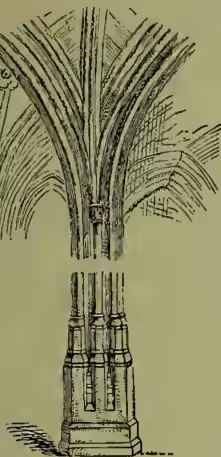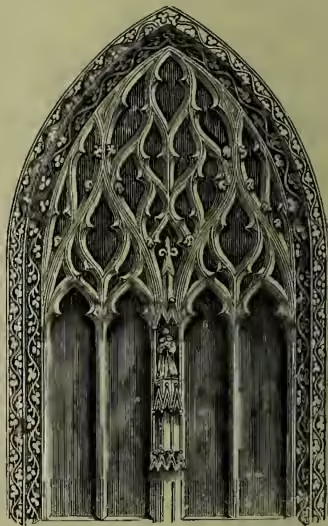
Flamboyant, the latest style of Gothic architecture, which prevailed in France during the 15th and part of the 16th centuries, and corresponds to the Perpendicular (q.v.) in England. The name is derived from the flame-like forms of the tracery of the windows, panels, &c. (fig. 1). The characteristics of this style are minute and elaborate ornament, combined with general bareness of surface. The crockets, for instance, are generally cut into a great number of small leaves, while they are placed far apart; the mouldings are divided into large empty hollows and small thin fillets and beads; the finials have crockets minutely carved, set upon bare pyramidal terminals; the arch-mouldings are divided into a great number of small members, and want the boldness and decision of the earlier styles. These mouldings are frequently abutted on the pillars, or continued down them without any caps; and when there are caps, they are small and without effect (see fig. 2). When mouldings join, they are frequently run through one another, so as to appear to interlace. The effect is intricate rather than beautiful, suggestive, like the rest of the style, of ingenuity in stone-cutting rather than art. The doorways and windows are sometimes large and fine (as in fig. 1); but, while these are highly enriched, the general surface of the building is left too plain. The foliage and running enrichments are frequently carved with great spirit. There are many large buildings in France executed in this style, but it is usually portions only which are fine, not the general effect. Some of the spires of this period are also very beautiful. The north-western spire of Chartres (q.v.) Cathedral, for example, is considered one of the finest in France.