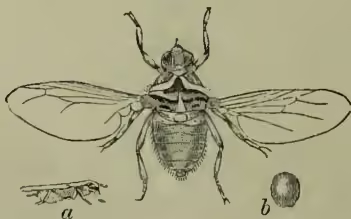
a, natural size; b, the pupa, as deposited by the mother.
Forest-fly, or HORSE-FLY (Hippobosca equina), a Dipterous insect, parasitic on horses, oxen, &c., frequent in forests, particularly in the New Forest, Hampshire. It is a small insect, about four lines long, of a shining brown colour, with some yellow. Living on the blood of its host, it especially infests the tail, belly, and flanks. The insect passes the larval stage and becomes a pupa within the mother. One only is produced at a time, enclosed in a relatively large, black, bead-like, tough cocoon, from which the insect finally emerges by bursting open a kind of lid.