Fritillary (Fritillaria), a genus of the Liliaceae, closely allied to the lily and tulip, are herbaceous and bulbous-rooted plants. About
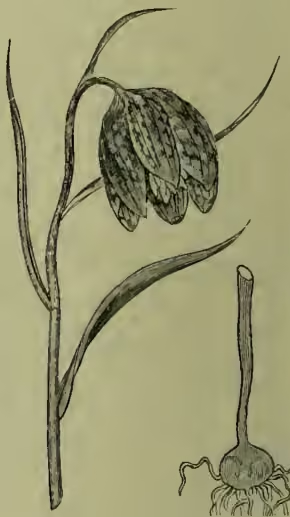
(Fritillaria meleagris).
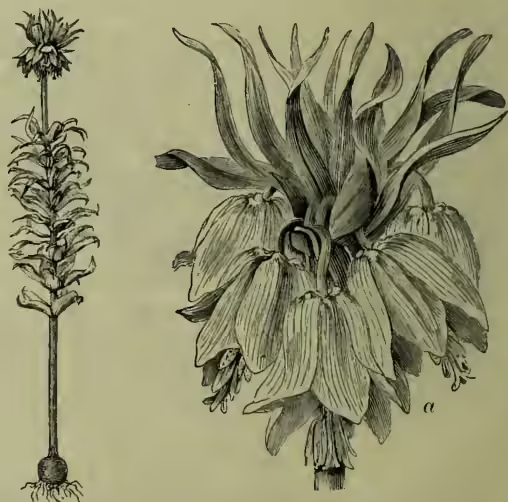
a, flower enlarged.
twenty species are known, all palaearctic. All of them have drooping flowers; some of them are beautiful. One species only is a native of Britain, the Common Fritillary (F. melagris), also called Snake's Head, Chequer-flower, &c., which is found in meadows and pastures in the east and south of England, flowering in April or May. They are specially plentiful in the Magdalen water-meadows, Oxford. The flowers are pale or dark purple, tessellated with dark markings, sometimes cream-white. Many varieties are in cultivation.—This genus includes the Crown Imperial (F. imperialis), which was brought from Persia to Constantinople in the 16th century, and thence introduced through the imperial garden at Vienna into western Europe, where it soon became a constant inmate of the herbaceous border. The bulb of the common species, but still more of this one, is poisonous.