Fulmar, or FULMAR PETREL (Fulmarus), a genus of sea-birds, in the family Procellariidæ, beside the albatross, the storm petrel, and the puffin, and near the gulls (Laridæ). The genus includes some forty species, which are widely distributed and strictly oceanic. The members agree in general features with the petrels proper (Procellaria), and all possess strong hooked bills. The general appearance is gull-like; the wings long and the flight powerful; the tail short; the hind-toe reduced to a sharp clawed wart. They are said to defend themselves from attack by disgorging an ill-flavoured oily secretion from the alimentary canal.
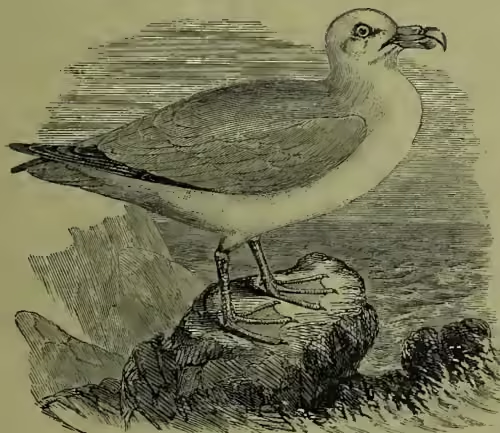
The best-known species, the common Fulmar (F. glacialis), frequents the northern seas in numbers so immense that Darwin awards it the somewhat unverifiable credit of being the most abundant of birds. It is a rarity on British or indeed
European coasts, but nests or at least used to nest in St Kilda, Skye, Barra, and Foula, and is common farther north in the Faroes, Iceland, Spitzbergen, and similar localities. The bird is about the size of a duck, has the general colouring of the common gull (Larus canus), and is well known as the Greedy Molly-mawk, which, with beautiful gliding flight, follows whalers and other vessels after they get north of Shetland. It feeds on fishes, molluscs, jelly-fish, on the offal of the Newfoundland cod-fisheries, on the debris thrown from the successful whalers, and is in fact an indiscriminately carnivorous bird, with a preference for blubber. On a dead whale they are said to glut themselves till they are unable to fly, and sailors not unfrequently catch them with lines and hooks baited with fat. From living whales they are said to pick the Cirripedes parasitically imbedded in the skin. They breed on rocky shores, but there is no nest worth mentioning. Although the individuals are so numerous, there is only a single egg, which has a white colour.
The greedy fulmar is of no little use to the natives of the regions where it abounds. Both eggs and young are collected and eaten, and the birds are also valued for their down and oil. In St Kilda the quest for fulmars used to be an important and extremely perilous means of livelihood, while it is said that in a single little island, Westmanæyjar, south of Iceland, over 20,000 of the strong-smelling, uninviting, young fulmars are salted every summer for winter fare. The oil, which is obtained from the flesh and stomach, is amber-coloured, and has a peculiar, persistent, and unpleasant smell. From the Pacific, F. pacificus is usually distinguished; and the large F. giganteus from southern regions is also worthy of note. See PETREL.