Gall-fly, or GALL-WASP, names generally applied to any member of a large family (Cynipidæ) of Hymenopterous insects, most of the females of which lay their eggs in plants and by the associated irritation produce galls. The insects are not unlike little wasps, with straight, thread-like antennæ, laterally compressed abdomen, and long wings.
The eggs are laid in the leaves, twigs, roots, &c. of plants, which the mothers pierce with their ovipositors. The irritation of the wound and of the intruded and rapidly developing eggs results in pathological excrescences or galls. Within these the larvae feed and grow, and either eat their way out while still grubs or remain till the pupa stage is past and emerge as adolescent insects. A gall may contain a single egg and larva or many, and both external form and internal structure vary widely.
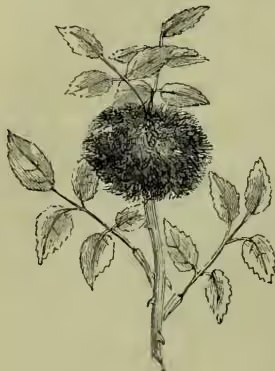
Each gall-fly has its favourite or exclusive host, and usually restricts its egg-laying to some special part of the plant. While most produce true galls, some members of the family act like cuckoos and utilise galls already formed by other genera. Others again depart more widely from the general habit and deposit their ova in other insects. The genera Cynips, Aphilotrix, Andricus, Neuroterus, Spathogaster, Biorhiza all form galls on oaks; Rhodites is the cause of mossy excrescences on rose bushes. Among those which utilise already formed galls Syneragus and Aulax are important genera; while Ibalia, Figites, Eucoila, and the minute species of Allotria are in their youth parasitic on other insects such as flies and plant-lice.
The reproductive relations of gall-flies are very interesting: in many cases parthenogenesis undoubtedly occurs; in some species—e.g. of Rhodites, no males have ever been found; in other forms the
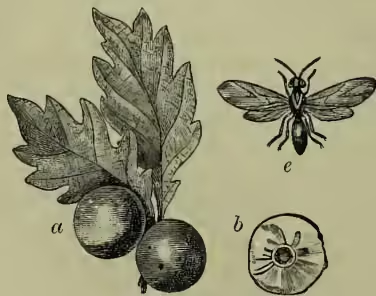
a, oak gall produced by Cynips quercus-folii; b, section of gall; c, gall-insect (Cynips quercus-folii).
males when they occur are very few in proportion to the females. It must be emphasised that many gall-wasps distinguished by entomologists as sepa- rate species or even referred to different genera have turned out to be the parthenogenetic and the sexual forms of one species. A common life-history is as follows: (a) Out of a summer-gall male and female forms emerge; (b) the females lay their fertilised eggs and give origin to winter-galls in so doing; (c) from these winter-galls there arise parthenogenetic females which in their egg-laying produce the summer-galls from which we started.
Among the common gall-wasps Cynips quercus-folii makes the cherry-galls of oak leaves; C. tinetoria produces the well-known ink-gall of the Levantine oak; Rhodites roseæ forms the curious and familiar 'Bedeguar' (q.v.) on wild roses.
See GALLS, INK, INSECT, PARTHENOGENESIS. For the life-histories, see Adler, Zeitsch. f. wiss. Zool. (1881), and his Alternating Generations: a Study of Gall-flies (trans. 1894); Annals and Magazine of Natural History (5th series, vol. viii.); Bassett, Canad. Entomologist (1873-75, p. 91); W. K. Brooks, Heredity (Baltimore, 1883).