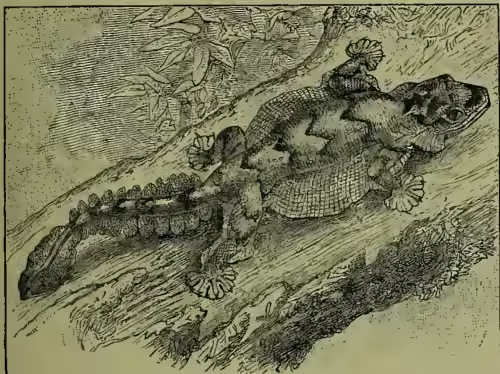
Gecko, a group of lizards constituting a family, Geckotidae, which have been divided into a large number of genera, including more than 200 species. The geckos are of small size, the colours of most of them are dull, and the small granular scales with which they are covered are in general mingled with tubercles. The legs are short, the gait usually slow, measured, and stealthy, although geckos can also run very nimbly when danger presses, and often disappear very suddenly when they seem almost to be struck or caught. The feet are remarkable, being adapted for adhering to smooth surfaces, so that geckos readily climb the smoothest trees or walls, or creep inverted on ceilings, or hang on the lower side of the large leaves in which tropical vegetation abounds. The body and tail are never crested, but are sometimes furnished with lateral membranes, variously festooned or fringed. The lateral membrane is sometimes even so large as to be of use to arboreal species in enabling them to take long leaps from branch to branch. The geckos feed chiefly on insects. They are more or less nocturnal in their habits. They are natives of warm climates, and are very widely distributed over the world, being especially numerous in the Indian and Australian regions. Two species are found in the south of Europe, both of which frequently enter houses, as do the geckos of Egypt, India, and other warm countries. The name gecko is derived from a peculiar cry often uttered by some of the species, and which in some of them resembles syllables distinctly pronounced, whilst others are described as enlivening the night in tropical forests by a harsh cackle. The geckos have, in almost all parts of the world where they are found, a bad reputation as venomous, and as imparting injurious qualities to food which they touch; but there is no good evidence in support of any such opinion, in accordance with which, however, an Egyptian gecko is even known as 'the father of leprosy.'