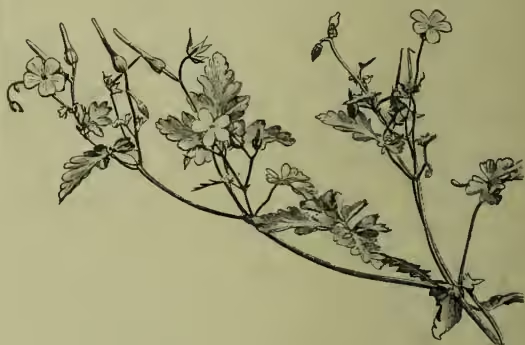
Geranium, the typical genus of Geraniaceæ, which includes about 100 perennial and annual herbs. The popular name (Crane's-bill) is derived from the resemblance to the crane's beak presented by the beak-like process attached to the fruit, this curiously assists in the distribution of the seed by its characteristic mode of splitting spirally into avn-like processes and carrying the seed along with them. Twelve species are natives of the woods, hedgerows, and fields of Britain. Of these several are cultivated in gardens, especially G. sanguineum, with its variety lanceastriense, and the double-flowered form of G. sylvaticum, one of the handsomest of border flowers, while among pretty exotic species may be named G. armenum, platypetalum, &c. Several are of old medicinal repute, notably G. Robertianum (Herb Robert or Stinking Crane's-bill), which emits a strong disagreeable odour that is said to banish bugs: it is indigenous in the United States. G. maculatum is the Alum Root of North America—a root so powerfully astringent as to be employed, both by the Indians and the European settlers in the United States, in domestic medicine for many disorders requiring the exhibition of astringents. G. carolinianum is another American species. A few species produce edible tubers—e.g. G. tuberosum of South Europe, and G. parviflorum, the Native Carrot of Tasmania. The name Geranium is, however, often popularly misapplied to the members of the allied genus Pelargonium; witness the so-called 'scarlet geranium,' 'ivy-leaved geranium,' &c. See PELARGONIUM.