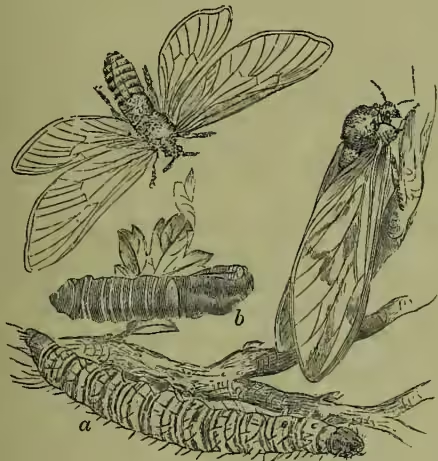
caterpillar (a) and chrysalis (b).
Ghost-moth (Hepialus humuli), a species of moth very common in many parts of Britain, of which the caterpillar, popularly known as the 'Otter,' often commits great ravages in hop gardens, devouring the roots of the plants. It feeds also on the roots of the nettle, burdock, and some other plants. The moth belongs to a small family (Hepialidæ), often popularly called Swifts from their rapid flight. The antennæ are short, the wings long and narrow, the entire size about two inches across. The male is entirely of a satiny white colour above, and the female yellowish and reddish with darker markings; both sexes are brown on the under side. They are to be seen flying about in the twilight, generally over lawns and pastures, not unfrequently in churchyards. From this circumstance, and from the white colour of the males and their sudden disappearance in the imperfect light on their folding their wings or rising above the level of the spectator's eye (so that the brown part is turned towards him), they derive their name. The caterpillar, which is sometimes two inches long, is yellowish-white, with scattered hairs. It spins a large cylindrical cocoon among the roots on which it has been feeding, and then becomes a chrysalis. Two other common species of generally similar habit are H. lupulinus and H. hectors.