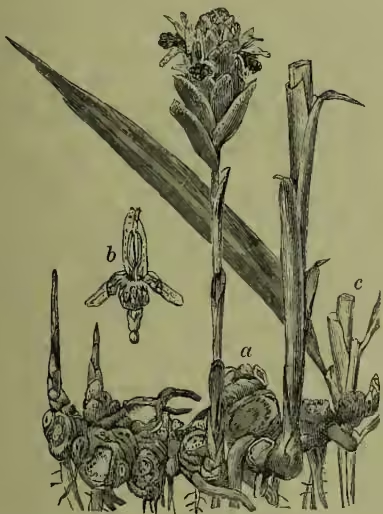
Gingko (Gingko biloba, or Salisburya adiantifolia) is the Japanese name of a coniferous tree of the yew alliance (Taxaceæ), with very characteristic leaves, in form and variation recalling the leaflets of the maiden-hair ferns. The yellow drupe-like seeds reach the size of a walnut, and are largely eaten throughout China and Japan; the chestnut-like kernels are roasted like chestnuts, and also in the Himalayas in moist situations. The root-stock is taken up when the stems have withered, and is prepared for the market either simply by scalding in boiling water—in order to kill it—and subsequent drying, or by scraping and washing. The first method yields Black Ginger, the second White Ginger; but there are considerable varietal differences in the shades of these. The blackest of Black Ginger, moreover, is only of a stone colour, and the whitest of White Ginger very far from yield a wholesome oil. The Japanese esteemed the tree as sacred, and planted it round their temples. Being a free-grower, and having been introduced in the 18th century, large trees are now not uncommon in Europe, nor in America, where they were introduced in 1784. The tree is dioecious, but the Chinese sometimes plant several male and female trees close together, so that male and female flowers appear to arise on the same tree.