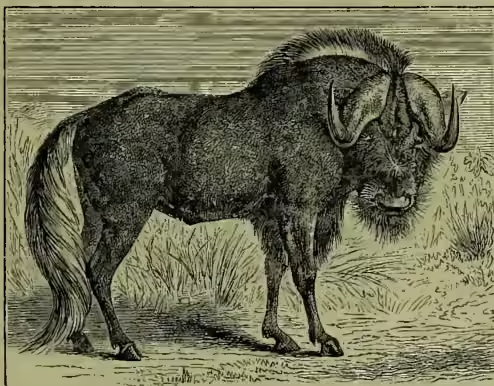
Gnu (Catoblepas), a genus of antelopes (termed Wildebeest by the Boers), of which the best-known species has been often described as apparently made up of parts of different animals, not only of the antelope and the ox or buffalo, but even of the horse. This species (C. Gnu) is a native of South Africa; it has disappeared from the more settled parts of Cape Colony, but is to be seen in herds on the arid plains beyond these boundaries in company with small troops of zebras, and with flocks of ostriches. The form and action of gnus so much resemble those of zebras and quaggas that at a distance they may be readily mistaken for them. The size of the gnu is that of a large ass; the general colour is yellowish-tawny. Both sexes have horns. The limbs are slender, like those of deer and antelopes. The gnu gallops with great speed. It has been usually represented as a very fierce animal, and certainly shows much ability to defend itself with its horns, when unable to escape from danger by flight; but when taken young it is easily tamed, and readily associates with oxen, accompanying them to and from the field. There are two or three species, all South African, nearly resembling the common gnu, and one considerably larger. Millais in A Breath from the Veldt (1895), reported that only 550 were left alive in South Africa, of which one herd were quite wild, and some were preserved by a wealthy Boer.