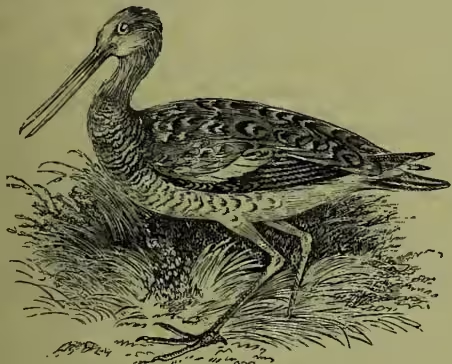
Godwit (Limosa), a genus of birds of the snipe family (Scelopacidae), with very long bill, slightly curved upwards, and long slender legs, with a great part of the tibia bare. All the species frequent marshes and shallow waters, chiefly those of the sea-coast, where they seek their food like snipes by wading and by plunging the long bill into the water or mud. They sometimes also run after small crustaceans or other animals, and catch them on the sands from which the tide has retired. Two species, the Black-tailed Godwit (L. belgica) and the Bar-tailed Godwit (L. lapponica), are as birds of passage not unfrequent visitors of the marshy parts of the east coast of England, where the first used to breed. Nowadays the bar-tailed species is much the commoner, being especially abundant on the coast of Northumberland. Both normally breed in more northern countries, and are seen in Britain chiefly in their migrations northward and southward. Both have a wide range in Europe, Asia, and Africa. The females are larger than the males, and the whole length of the female black-tailed godwit, which is rather the larger species, is about 17 inches, the bill alone being 4 inches long. They are much esteemed for the table, and are sent from Holland to the London market.