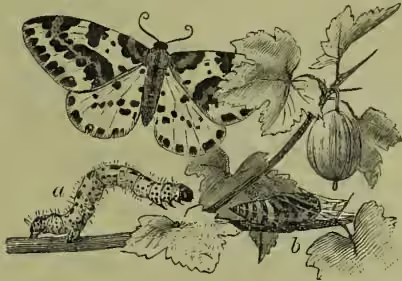
a, caterpillar ; b, chrysalis.
Gooseberry Caterpillar, a name applied to the larvæ of two very different insects, both injurious to gooseberry and currant bushes. (1) The Magpie Moth (Abraxas grossulariata), appearing about midsummer, has usually a black head, yellow body, and white wings spotted with black. From eggs laid on the leaves of the above-mentioned bushes caterpillars hatch in September, feed for a brief space, and then hide themselves till May or June of the next year. The caterpillar is a 'looper,' drawing itself up into a peculiar curve when alarmed, and has a black head, creamy body with some stripes of reddish-orange along the side and elsewhere, and with a row of black spots along the middle line of the back. After a period of voracity, it spins a transparent cocoon and passes into a chrysalis, 'yellow at first, but afterwards shining black, with orange-coloured rings.' Care of the bushes, syringing with various washes, and gathering the torpid caterpillars are the usual means of prevention and remedy. (2) More destructive than the above is the larva of the Gooseberry Sawfly (Nematus ribesii), which plays havoc with the leaves of our bushes.
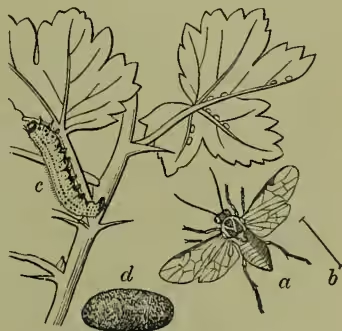
a, adult fly ; b, natural size ; c, larva ; d, pupa.
The female sawfly appears about April and lays her eggs on the leaves. The grubs hatch in a week or less, and eat small round holes first in the leaf on which they are born, then all over the bush. The adult fly is a yellowish insect with transparent wings, and measures about a third of an inch in length. The larva is bluish-green, with black head, feet, tail, and spots, with twenty feet, and a length of about three-fourths of an inch when full grown. At maturity they drop from the bushes, and bury themselves in the ground to undergo their metamorphoses. The grubs of late summer broods remain as such, but within cocoons, throughout winter, finishing their metamorphoses as the gooseberry bushes are becoming leafy in spring. Miss Ormerod recommends removing the surface soil in early spring from under the bushes, treatment with lime, picking off attacked leaves, drenching the bush with warm water not hot enough to hurt the leaves, dusting with flour of sulphur, &c. Dusting with hellebore powder is dangerous to those who may eat the berries from which the poison has not been removed. In regard to both these practically important insects, consult Miss Ormerod's Manual of Injurious Insects (Lond. 1881).