Grebe (Podiceps), a genus of diving birds (Pygopodes), usually frequenting rivers and fresh-water lakes, and visiting the sea only when migrating or in winter. The foot of the grebe is broad and flattened; the toes lobed and bearing separate membranes united only at the base; the wings are short and rounded; and there is virtually no tail. The legs are placed so far back that the bird stands erect like the penguins. Its movements on land are ungainly in the extreme, but it swims gracefully, and is the most expert of divers, not using its wings, but propelling itself on its downward career solely by the aid of its paddle-like feet. The grebe seldom leaves the water, and can even swim under the surface for a considerable distance, threading its way with wonderful expertness among the stalks and leaves of aquatic plants. A floating nest is built of leaves and twigs and moored to reeds or grasses. The eggs are covered with a chalky incrustation, and are so wide in the middle as to look almost biconical. The mother-bird, before leaving the nest, scratches the weeds over them with her feet, so that the whole looks like a tangled mass of rubbish. She is careful of her young, carrying them on her back, and even diving with one under her wing. The grebe feeds chiefly on crustaceans, frogs, and small fishes, partly, however, on vegetable food. The plumage varies at different seasons.
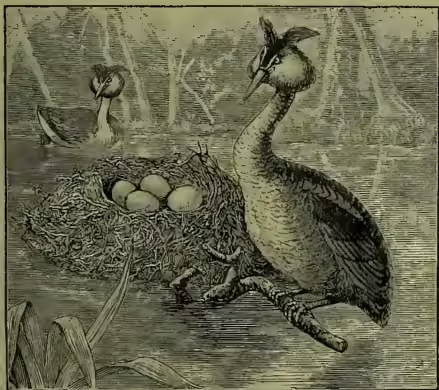
The Great Crested Grebe (P. cristatus) is found all the year round on inland lakes in England and Ireland, more rarely in Scotland, and at the sea-coast in winter when driven by frost from the lakes. The adult male is 22 inches in length, and is very conspicuous in flying because of the glossy whiteness of the plumage on the ventral surface; the female is smaller and has a less developed crest. The best-known British species is the Little Grebe or Dabchick (P. fluviatilis), one of our most beautiful river-birds, which is widely distributed throughout England and Ireland, and is also found in Scotland, where it breeds at an elevation of 2000 feet. In summer the head, neck, and upper parts are dark brown, the under parts grayish-white; in winter the colours are paler. Gould describes the young dabchicks as having 'delicate rose-coloured bills, harlequin-like markings, and rosy-white aprons.' The adult bird only reaches a length of 9 to 10 inches. The Red-necked Grebe (P. griseigena) and the Slavonian or Horned Grebe (P. auritus) visit our shores in autumn and winter, and the Black-necked or Eared Grebe (P. nigricollis) in spring and summer. An allied genus, Podilymbus, comprising two species, is confined to North and South America. The grebes are much sought after for their plumage, but their shyness and their great agility in diving and swimming under water render them extremely difficult to shoot. So easily alarmed are they that Mr Ruskin, in his somewhat revolutionary treatment of ornithological nomenclature, proposed to rename the genus Trepida. The skin of the grebes is made into muffs or cut into strips for trimmings, the beautiful, satiny plumage on the lower parts of the body of the Great Crested Grebe being in particular request for these purposes. See Howard Saunders, Manual of British Birds; and Ruskin, Love's Meinie.