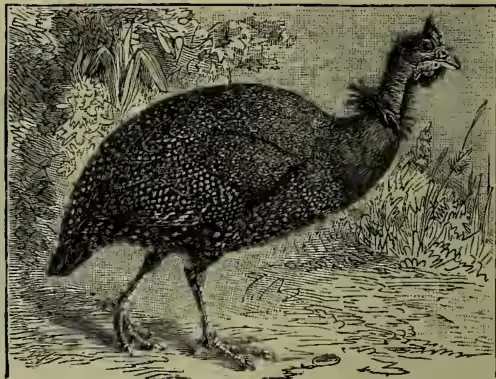
Guinea Fowl (Numida), a genus of African birds in the Pheasant family (Phasianidæ). The plumage is dark gray, with round spots of white, generally larger on the back and under surface. Some species are adorned on the head with a helmet or horny casque, while others have fleshy wattles on the cheeks and a tuft or top-knot on the crown. The genus is represented by nine species, in the Ethiopian region—east to Madagascar, south to Natal. The best known is the Common Guinea Fowl or Pintado (N. meleagris), also popularly known as 'Come-back,' from its cry, with naked head, hard callous casque, and slate-coloured plumage, everywhere speckled with round white spots of various sizes. It is common in Guinea and southwards to the Cape of Good Hope. It is found also in more northern parts of Africa, and was known to the ancient Romans, by whom it was called Meleagris and Gallina Numidica, and highly prized. In their wild state the birds occur in flocks, sometimes of fifty to sixty, and are extremely shy and difficult to approach. They utter a frequent, harsh, and querulous cry. They are not so polygamous as many of the gallinaceous birds, and even in domestication show a tendency to pair. The Guinea fowl is now common in the poultry-yards of most parts of Europe, although it is more adapted to warm than to cold climates, and in Jamaica has been completely naturalised, so as to be destructive to crops and to be shot like other game. In Britain the young are rather troublesome to rear, but both birds and eggs command high prices in the market. The eggs are small, and have a thick, strong shell, but are particularly esteemed. The flesh is somewhat like a pheasant's, but rather dry. Guinea fowls, however, are troublesome in a poultry-yard, from the disposition of the males to attack and tyrannise over other poultry.