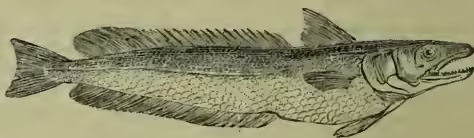
Hake (Merluccius), a genus of fishes of the cod family (Gadidae), having a flattened head, an elongated body, two dorsal fins, of which the first is short, and the second very long, one very long anal fin, and the mouth destitute of barbels. One species, the Common Hake (M. vulgaris), is found in the British seas, in those of the north of Europe, and in the Mediterranean. It is sometimes 3 or 4 feet in length; and is of a whitish colour, grayish on the back. It is a very voracious fish, devouring great numbers of herrings and pilchards; hence it is frequently called the Herring Hake. It is a coarse fish, its flesh white and flaky; but it is important as an article of human food and of commerce, being salted and dried in the same manner as cod and ling, in common with which it receives in this state the name of stock-fish. It is generally taken by lines, like cod and ling. In the spawning season, when it keeps near the bottom, it is sometimes caught by trawl-nets.—One other species is known, M. gayi, which is common in the Strait of Magellan and on the coasts of Chili, and also occurs in New Zealand.