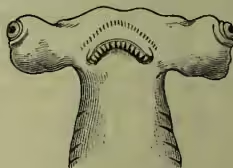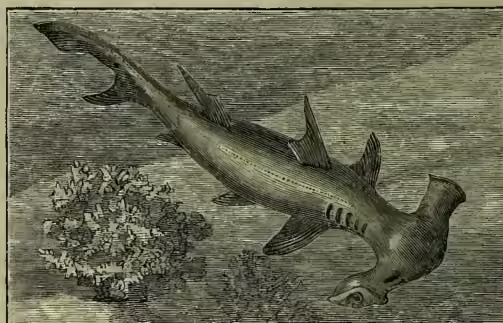
Hammer-head, or HAMMER-HEADED SHARK (Zygena), a genus of fishes of the family of Sharks, having the general form and characters of the family, but distinguished from all other fishes by the unusual form of the head, which, resembling a double-headed hammer laid flat, extends on both sides to a considerable length, carrying the eyes at the ends of the lateral expansions. The crescent-shaped mouth is below the centre of the head, the nostrils are on the front edge of the head, and the eyes are covered by an eyelid or nictitating membrane.
In young specimens the hammer-headed shape is not so well developed as in adults. The hammer-heads bring forth their young alive. In one female, nearly 11 feet long, thirty-seven embryos were found. There are five known species, all of them being most abundant in the tropics. Z. malleus, by far the most common form, occurs in nearly all tropical and subtropical seas. In the tropics specimens of this species 'may often be seen ascending from the clear blue depths of the ocean like a great cloud.' Some large ones, one over 13 feet long, have been taken on the British coasts.