Harebell, or BLUEBELL (Campanula rotundifolia), the most common of the British species of Bellflower (see CAMPANULA), growing in dry and hilly pastures, on waysides, &c., is found in most parts of Europe. It is a perennial plant, with a slender stem 6 to 14 inches high, bearing a loose raceme of a few drooping flowers, on very slender stalks; the flowers, generally bright blue, but sometimes white, bell-shaped, and about half an inch long, appear in summer and autumn. The juice of the flowers yields a fine blue colour, and may be used as ink.
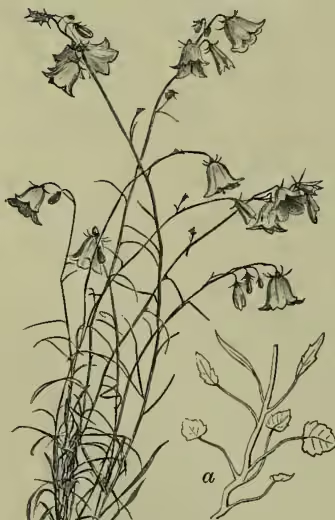
a, lower stem-leaves.