Harrier (Circus), a genus of non-arboreal Falconidae, of slender build, with a somewhat weak, unnotched bill, with soft plumage and a slightly owl-like ruff on the face, with long legs and wings, and a characteristic gliding flight along the ground.
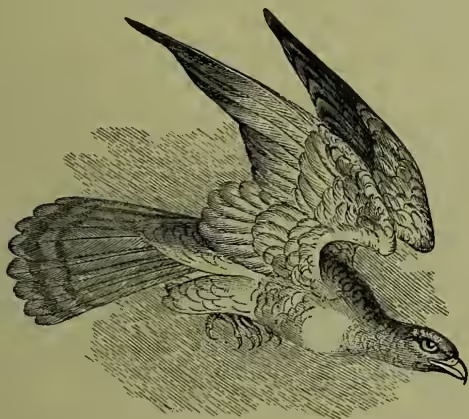
They live in the open country, are fond of marshy districts, and dexterously catch frogs, birds, and small mammals. The females are usually larger and darker than the males; the young are like the mother-birds; the nest is almost always on the ground, and the eggs (3 to 5) are white or blotched. The British species of harrier are (1) the Hen-harrier (C. cyaneus), almost exterminated in England, but still not uncommon in some parts of Scotland; (2) the Marsh-harrier or Moor-buzzard (C. aeruginosus), all but exterminated throughout Britain; and (3) Montagu's Harrier (C. cinerascens), never more than an occasional visitor. The marsh-harrier is abundant in many parts of North America.