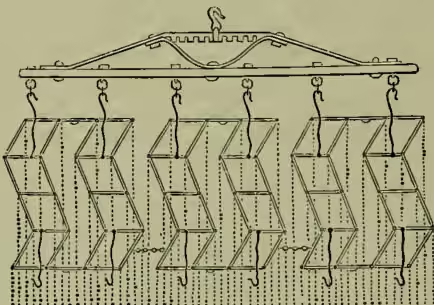
Harrow, an agricultural implement used for smoothing and pulverising ploughed land, and for covering the seeds previously sown. It consists of a frame of a square or rhombic form, in which are fixed rows of teeth, or tines, projecting downwards. The harrow is a very ancient implement, having been in use beyond the dawn of history; but as in early times only the lighter soils were cultivated, it often consisted of bushes, or branches of trees, which merely scratched the ground. Subsequently, we find a wooden frame and wooden tines in use; next, the wooden frame with iron tines, a form of the instrument still in use in many parts, especially upon light soils. The harrow constructed wholly of iron is now most largely employed, and as it can be made light or heavy, works more cleanly, and is more durable, it is preferable to the old wooden form. Iron harrows are usually made in zigzag form as shown below. The Howard harrow has the tines so arranged that no one follows in the track of another, but each has a separate line of action which greatly diminishes the risk of any portion of the surface escaping pulverisation. Exceptionally strong harrows with rank teeth are made for breaking down rough or hard land. The 'chain-harrow,' which is a congeries of iron rings, is useful for covering grass-seeds, and especially for separating weeds from the earth or clods in which they are enveloped. Drill harrows are constructed to scarify the soil between raised drills and also the raised drills themselves.