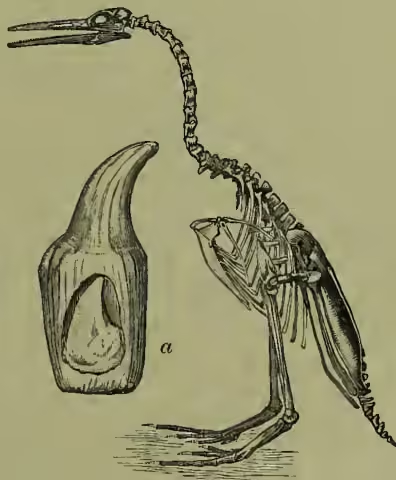
a, tooth of do, with germ of second tooth (magnified).
Hesperornis, a remarkable extinct form of bird, the remains of which have been met with in the American Cretaceous deposits. As described by Professor Marsh, it possessed small pointed reptilian teeth, which were implanted in a deep continuous groove, somewhat like those of Ichthyosaurus. Its brain was small and more reptilian in type than that of any adult bird as yet examined. It appears to have been a large diving-bird, measuring over 5 feet from the point of the bill to the end of the toes. Its wings were rudimentary, its legs powerful, and its feet well adapted for rapid progression in water. The tail was broad, could move up and down, and was probably used as a rudder or swimming-paddle. The long slender jaws were united in front only by cartilage, as in serpents, and had on each side a joint which admitted of some motion, so that 'the power of swallowing was doubtless equal to almost any emergency.' See ODONTORNITHES.