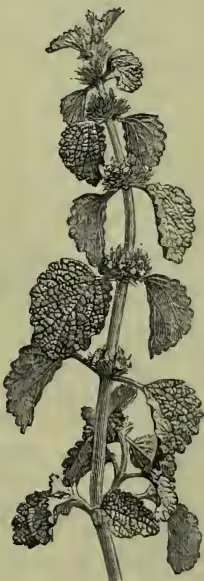
(Marrubium vulgare).
Horehound (Marrubium), a genus of plants of the natural order Labiatae, having a tubular 10-ribbed calyx, with 5 or 10 spiny equal teeth, 4 stamens included in the corolla, the upper lip of the corolla erect, the lower lip 3-cleft. The species are mostly perennial, herbaceous plants, natives of the south of Europe and the East. One species, the Common or White Horehound (M. vulgare), is a rather rare native of Britain, and is found generally throughout Europe, except in the more northern regions, growing in waste places, waysides, &c. It is frequently cultivated in gardens among collections of herbs. It is about 1 to 1½ feet high, bushy, with roundish, ovate, crenate, wrinkled leaves, and almost globose whorls of white flowers. The whole plant has a whitish appearance, from the down with which its leaves are covered. It has an aromatic but not very agreeable smell. It is tonic, stimulant, and laxative, and is much used in coughs, being a popular remedy, and a very safe and efficacious one. It was formerly also employed in affections of the womb and of the liver. It is administered in the form of an infusion, or made into a syrup with sugar, and sometimes the syrup is candied. Black Horehound is the popular name of Ballota nigra, another native of Britain, and belonging to the same natural order. For Water Horehound, see GYPSY-WORT.