Jasmine, or JESSAMINE (Jasminum), a genus of plants of the natural order Jasminaceæ. The genus Jasmine has its calyx and corolla each 5 or 8 cleft, two stamens attached to and included within the tube of the corolla, and a two-lobed berry, one of the lobes generally abortive. The name Jasmine is from the Persian yāsmīn. The native country and the date of introduction of the Common Jasmine (J. officinale) are unknown, but according to Gerard it was in common use as a wall-shrub and for covering arbours as far back as 1597, and it is naturalised in many parts of Europe and Asia.
The perfume is obtained from the flowers by means of absorption in a fatty substance. An essential oil is also distilled from jasmine. The commercial oil of jasmine, however, is merely oil of ben or the like flavoured with jasmine.—J. grandiflorum, a native of the East Indies, has flowers still more fragrant. Another Indian species is J. Sambac.
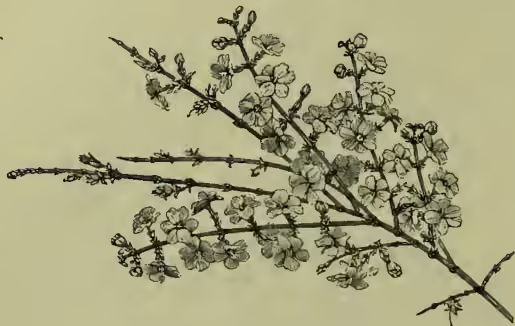
—Several other species, some with erect and some with twining stems, are not uncommon in gardens and greenhouses. Some have white, and some have yellow flowers.—Cape Jasmine is a name for Gardenia (q.v.), and the Carolina Jasmine is Gelsemium (q.v.).